Review / Metroidvania / Action platformer
Castlevania: Belmont’s Curse
A Whip in the Right Direction
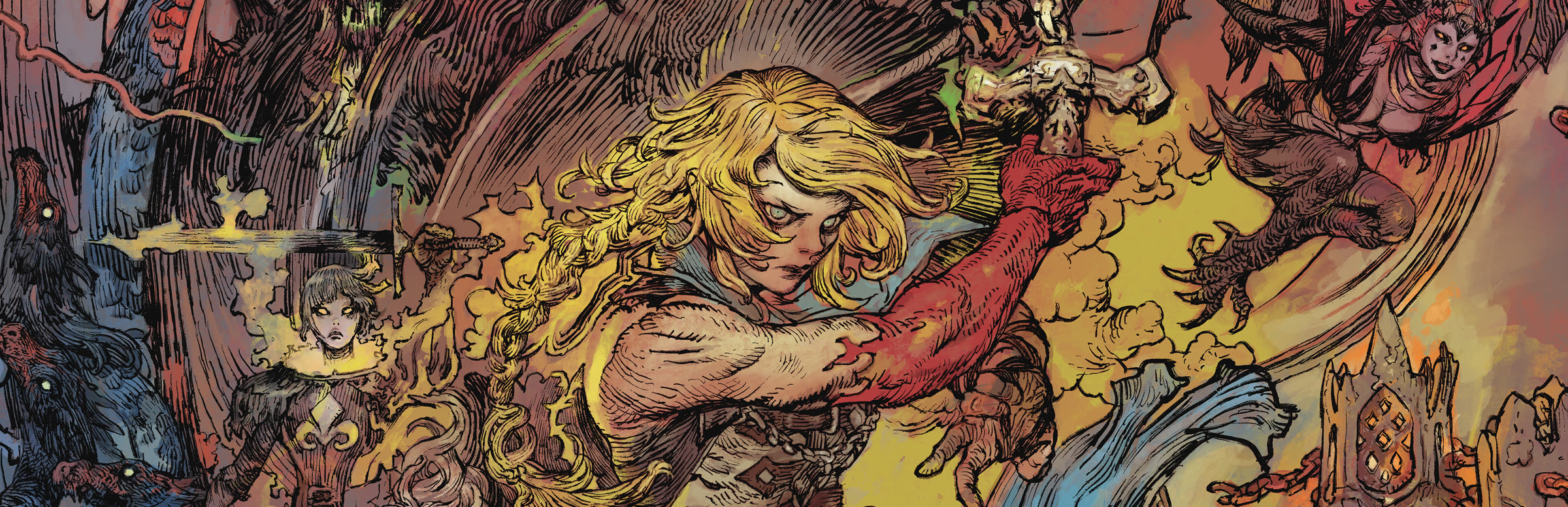
There’s something strange about Castlevania returning to a genre that has spent the better part of two decades moving forward without it.
Castlevania Has Some Catching Up to Do
Hollow Knight, Ori, Dead Cells, and Prince of Persia: The Lost Crown have all taken the Metroidvania formula and pushed it in different directions. The bar is considerably higher than it was when Castlevania helped establish the genre.
Simply bringing back Dracula, a whip, and a gothic castle isn’t enough anymore.
Fortunately, Castlevania: Belmont’s Curse has a few ideas of its own.
Developed by Konami and Evil Empire, with Motion Twin involved, Belmont’s Curse follows Rose Belmont through a monster-infested Paris in 1499.
It’s a familiar setup, but the gameplay takes a more action-oriented approach than some previous entries. Movement, positioning, and execution matter considerably more than grinding levels or finding equipment with slightly better numbers.
It’s a smart direction for the franchise, even if the execution isn’t always perfect.
The Whip Is the Star of the Show
The best design decision in Belmont’s Curse is making the whip more than just a weapon.
Rose uses it to attack enemies, grapple across gaps, and navigate environmental obstacles. It’s a relatively simple idea, but one that influences almost everything else.
Good movement mechanics shouldn’t exist independently from combat and level design. They should create opportunities that wouldn’t otherwise be possible.
The whip does exactly that.
It encourages aggressive positioning during combat while allowing designers to create more elaborate vertical environments and platforming sequences.
There’s something satisfying about reaching an area you previously couldn’t access and realizing that you now have the tools to navigate it.
That’s the kind of progression I want from a Metroidvania. Not just bigger numbers, but a better understanding of what your character can do.
Unfortunately, the controls don’t always feel as polished as the mechanics deserve.
Directional targeting and the wind-up on certain whip actions can make precision platforming more awkward than it needs to be, particularly when the game starts demanding rapid inputs around environmental hazards.
There’s a difference between challenging the player and fighting the controls.
Belmont’s Curse occasionally gets that balance wrong.
Combat Has More Going On Than It First Appears
The whip might be the defining mechanic, but Rose has considerably more equipment available.
Weapons are spread across seven categories, supplemented by relics and a magical ability system called Arcana.
Defeating bosses allows Rose to seal their powers into tarot cards, unlocking new skills and special attacks.
It’s a clever way to connect major encounters to player progression. Bosses aren’t simply obstacles to overcome; they expand what you can do afterward.
Those abilities also have specific challenges that unlock further improvements, encouraging experimentation rather than sticking with the first effective combination.
Combat rewards positioning, timing, and knowing when to commit to an attack.
Where things feel a little less ambitious is traditional character progression.
Stat increases provide incremental improvements, but they aren’t always particularly interesting decisions. The more meaningful changes come from acquiring new abilities and learning how to use them together.
That’s not necessarily a bad thing. A focused combat system can be more rewarding than one overloaded with shallow customization options.
But players expecting the build complexity of more RPG-heavy Metroidvanias may find Belmont’s Curse relatively limited.
The underlying combat is strong enough that I don’t think this holds the game back significantly, although there’s certainly room to expand these systems in a sequel.
A Castle Worth Exploring
Exploration is another area where Belmont’s Curse gets a lot right.
The opening areas of Paris establish the game’s mechanics and atmosphere, but things become considerably more interesting once Dracula’s castle enters the picture.
The environments begin making better use of Rose’s growing moveset, incorporating more elaborate puzzles, hidden paths, and platforming challenges.
The castle makes a particularly strong visual impression.
Detailed gothic architecture, dramatic backgrounds, and striking enemy designs give the game an identity that feels unmistakably Castlevania without simply recreating the older games.
More importantly, there’s a good sense of curiosity driving exploration.
Finding a locked passage or an unreachable ledge gives you something to remember when a new ability opens up additional possibilities.
That’s fundamental to good Metroidvania design.
Not every area reaches the same standard, though.
Some stretches rely too heavily on repeated enemy encounters or extended obstacle courses, while the opening progression takes longer than it should to introduce the more interesting abilities.
Backtracking is part of the genre, but it needs to provide something in return.
Revisiting an area with a new ability should make that environment feel different. Repeating a familiar route simply because fast travel isn’t convenient yet is considerably less interesting.
Belmont’s Curse delivers both experiences, but the better moments comfortably outweigh the weaker ones.
Difficulty Isn’t the Problem. Friction Is.
Belmont’s Curse can be challenging, particularly during boss encounters and later platforming sections.
That’s not a criticism.
Difficult games work when their systems are consistent enough that failure feels understandable. You recognize what went wrong, adjust, and improve.
The problem is that Belmont’s Curse doesn’t always maintain that consistency.
The whip’s directional controls can feel unforgiving, and some traversal challenges demand a level of precision that doesn’t always match the responsiveness of the mechanics.
Boss encounters introduce another issue: runbacks.
On the default settings, dying to certain bosses can require retracing part of the level before getting another attempt.
It’s an old-school approach, but I’m not convinced it’s a particularly good one.
Making players repeat content they’ve already demonstrated they can clear doesn’t automatically make the boss more challenging. It makes practicing the boss more time-consuming.
Belmont’s Curse does include a Custom Mode option that allows players to respawn outside boss doors, alongside other difficulty adjustments.
That’s a welcome feature.
Still, the fact that players can opt out of this friction raises a reasonable question about why it needs to be present by default.
Difficulty should come from mastering a challenge, not from how much repetition a player is willing to tolerate.
Thankfully, these problems don’t ruin the experience. The boss encounters themselves are often engaging, and the stronger fights make good use of the game’s movement and combat systems.
It’s just frustrating to see good design occasionally undermined by unnecessary friction.
A Beautiful Return With Room to Improve
Visually, Belmont’s Curse is an impressive return for the franchise.
Its stylized environments combine detailed scenery with an illustrated appearance that works particularly well with the gothic setting.
The backgrounds are rich, enemy designs have personality, and combat effects give attacks a convincing sense of impact.
There’s real attention to presentation here.
Occasionally, though, those effects can make combat harder to read. When a game emphasizes fast reactions and precise timing, clarity is just as important as making everything look impressive.
The narrative is more straightforward.
Rose’s journey provides a reason to explore Paris and Dracula’s castle, with enough connections to the wider Castlevania series to reward returning fans.
But the story isn’t the main attraction.
The game’s strongest storytelling comes through its environments, enemy designs, and the powers Rose collects along the way.
That’s where Belmont’s Curse feels most confident.
Who Should Play It?
If you enjoy challenging action-platformers and Metroidvanias, this is an easy recommendation. There’s plenty here for players who enjoy learning movement mechanics, discovering secrets, and mastering demanding encounters.
Traditional Castlevania fans will find familiar gothic atmosphere, hidden passages, recognizable enemies, and plenty of connections to the series’ history. Just expect more emphasis on fast combat and platforming than deep RPG progression.
Who should skip it? Players looking for relaxed exploration, extensive character customization, or extremely forgiving movement mechanics may find some of its design decisions frustrating. If repeated boss attempts or demanding platforming aren’t your thing, this probably isn’t going to change your mind.
The Verdict: Buy It
Castlevania: Belmont’s Curse doesn’t reinvent the Metroidvania, and it doesn’t need to.
What it does is bring the franchise back with a strong mechanical identity, enjoyable combat, and a world that’s genuinely worth exploring.
The whip is an excellent foundation for both combat and traversal, the Arcana system adds some welcome variety, and the visual direction gives the game plenty of personality.
There are shortcomings.
The controls could be tighter, progression could offer more meaningful choices, and some of the difficulty comes from friction rather than particularly clever challenges.
But those problems never completely overshadow what the game gets right.
At $29.99, there’s more than enough here to justify a full-price recommendation.
It may not surpass the best games in the genre, but it doesn’t feel like a franchise desperately trying to catch up either.
It feels like Castlevania has finally found a promising direction again.
And that’s a pretty good place to start.
Review in progress: we haven’t reached the credits yet. This review reflects our time with the game so far, and we’ll update it, including the score if it changes, once we finish.